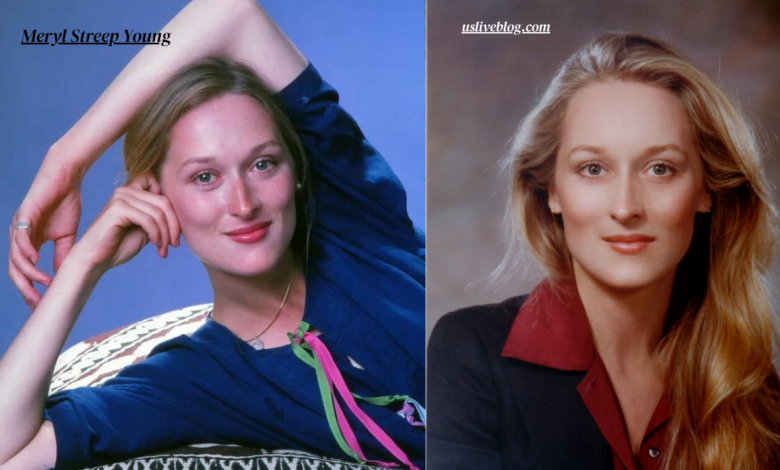
Meryl Streep Young There is a version of Meryl Streep that exists before the legend, before the three Academy Awards and the record-breaking nominations, before she became the universal answer to the question of who the greatest living actress is. Meryl Streep young is a story that doesn’t get told nearly enough — a story of a remarkably driven, intellectually fierce young woman from New Jersey who decided she wanted to act and then simply refused to be anything less than extraordinary at it. Understanding where she came from makes what she became not just impressive but genuinely illuminating about the nature of talent and the work required to fulfill it completely.
The Early Life That Shaped Everything
Meryl Streep young begins in Summit, New Jersey, where Mary Louise Streep was born on June 22, 1949. She grew up in a comfortable suburban household — her father was a pharmaceutical executive, her mother a commercial artist — and by most accounts had a fairly conventional American childhood that gave very little external indication of the extraordinary career that was coming. What was present from early on, however, was an almost compulsive interest in performance and a natural gift for inhabiting characters that her family and teachers noticed consistently.
The young Meryl Streep was, perhaps surprisingly to those who know only her serious dramatic reputation, a genuinely popular teenager. She was a cheerleader, homecoming queen material, socially confident in ways that the stereotype of the introverted artistic child doesn’t quite capture. But beneath that social ease, something more serious was already developing. She was taking voice lessons, performing in school productions, and discovering that the act of becoming someone else on stage gave her a particular kind of satisfaction that nothing else quite matched.
What Meryl Streep young demonstrated during her high school years was an early version of the discipline that would define her entire career. She wasn’t simply talented and coasting on it — she was already working, already treating performance as something that rewarded serious study rather than casual indulgence. That combination of natural gift and genuine work ethic, established before she ever set foot in a professional context, would become the foundation of everything that followed.
Vassar Dartmouth and the Making of a Serious Artist
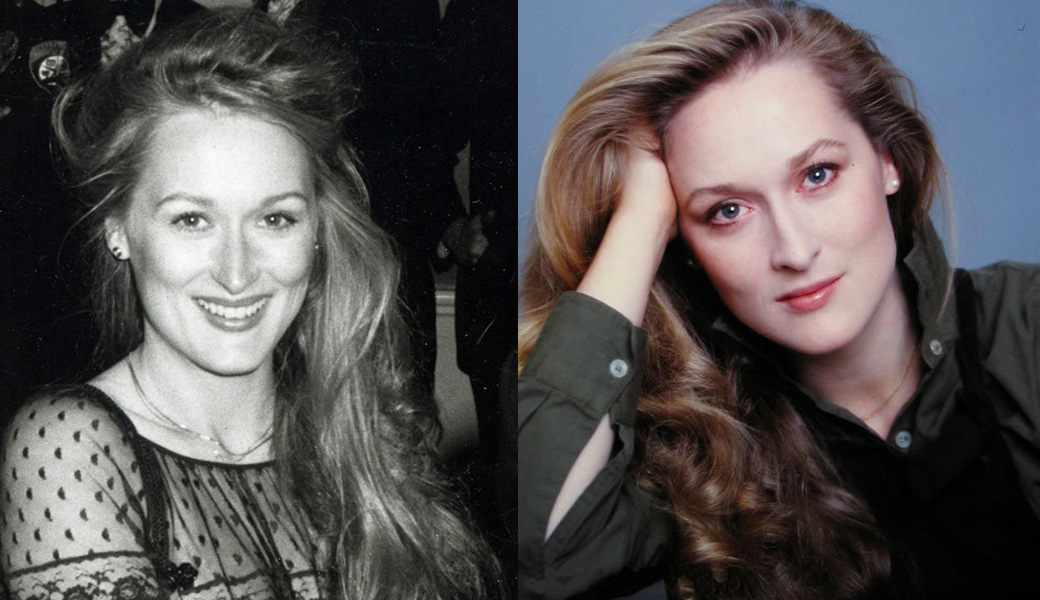
The academic chapter of Meryl Streep young is genuinely fascinating because it reveals how deliberately and thoughtfully she constructed her artistic foundation. She attended Vassar College, where she studied costume design initially before shifting fully toward drama. The intellectual environment of Vassar suited her — Meryl Streep young was never going to be satisfied with purely instinctive performance. She wanted to understand what she was doing and why, to bring her considerable intellect to bear on the craft as rigorously as her emotional intelligence.
After Vassar, Meryl Streep young made the decisive move of applying to the Yale School of Drama, one of the most rigorous and prestigious graduate theater programs in the world. Getting in was competitive enough. Thriving there was another challenge entirely. Yale Drama was not an environment that coddled students or inflated their sense of their own abilities. It was demanding, sometimes brutal in its critical standards, and designed to separate those with genuine professional potential from those who simply believed they had it.
Meryl Streep young not only survived Yale Drama — she dominated it. Her professors and classmates recognized almost immediately that they were in the presence of something unusual. The range she demonstrated during her training years was extraordinary, moving between comedy and tragedy, between classical material and contemporary work, with a fluency that most actors spend entire careers trying to develop. By the time she completed her MFA, the question wasn’t whether Meryl Streep young would have a career. The question was how extraordinary that career was going to be.
Early Theater Work and the New York Years
Before Hollywood discovered her, Meryl Streep young was building a formidable reputation on the New York theater scene that made her one of the most talked-about stage actresses of her generation. Her work at the Public Theater and on Broadway in the mid-1970s established her theatrical credentials in a way that purely film-focused training never could have. These were the years that built the technical foundation — the voice work, the physical discipline, the ability to sustain a performance over eight shows a week — that would make her screen work so distinctively layered and alive.
The range that Meryl Streep young displayed during these New York theater years was already being noted by critics and directors as something genuinely exceptional. She appeared in productions that spanned classical drama, modern American theater, and Shakespeare, demonstrating in each context a command that went well beyond what her relative youth and inexperience might have suggested. Directors who worked with her during this period describe an actress who came to rehearsal fully prepared, intellectually engaged with the material, and capable of making bold choices that somehow always served the work rather than her own ego.
It was also during these New York years that Meryl Streep young experienced one of the most significant personal losses of her life — the death of her partner, actor John Cazale, from bone cancer in 1978. Cazale, best known for his work in The Godfather films, was a deeply respected actor whom Streep cared for through his illness while simultaneously continuing to work. The emotional depth that this experience brought to Meryl Streep young as a person and as an artist is something she has referenced in interviews over the years — a reminder that the greatest performances are always informed by the fullness of a life genuinely lived.
The Film Breakthrough That Introduced the World to Young Meryl Streep
Hollywood came calling for Meryl Streep young in the late 1970s, and the film industry’s introduction to her abilities was immediate and overwhelming. Her screen debut in Julia in 1977 was a small role, but it announced a presence. Then came The Deer Hunter in 1978, Michael Cimino’s epic Vietnam drama, in which Meryl Streep young held her own alongside Robert De Niro and a cast of established heavy hitters in only her second significant film role. The performance earned her first Academy Award nomination, and the industry took definitive notice.
The role that truly crystallized what Meryl Streep young was capable of on screen came with Kramer vs. Kramer in 1979. Playing Joanna Kramer, a woman who leaves her husband and child and then fights to reclaim custody, required navigating a character who was simultaneously sympathetic and deeply uncomfortable — a woman making choices that audiences of the era found genuinely difficult to process with easy moral clarity. Meryl Streep young played that complexity without flinching, without asking the audience for approval, and without reducing Joanna to either victim or villain. She won her first Academy Award for the role and announced unambiguously that a major career had fully arrived.
Sophie’s Choice in 1982 completed the argument that Meryl Streep young had been making since her theater days. The role demanded a Polish accent sustained across an entire film, a performance operating across multiple time periods and emotional registers, and the ability to carry one of the most devastating dramatic climaxes in American cinema history. Meryl Streep young delivered all of it with a command and depth that produced her second Academy Award and permanently elevated the standard by which serious film acting would be evaluated.
What the Young Meryl Streep Tells Us About the Legend She Became
Looking back at Meryl Streep young with the full benefit of hindsight, what’s most striking is the consistency of character throughout every stage of her development. The discipline established in her New Jersey childhood, the intellectual rigor developed through Vassar and Yale, the technical foundation built during her New York theater years, and the fearless ambition demonstrated in her early film work — all of it was always present, always pointing in the same direction.
Meryl Streep young was never accidentally great. She was purposefully, systematically, and relentlessly great in the way that only people who combine extraordinary natural gifts with extraordinary dedication ever manage to be. The legend that exists today was built on foundations laid with remarkable intention by a young woman who understood early and completely what she was capable of and refused to settle for anything less than fulfilling that potential entirely. That story, more than any single performance or award, is the real legacy of Meryl Streep young.
You May Also Read