Amazon is one of those companies that has become so woven into everyday life that most people don’t even stop to think about how remarkable its rise actually is. What started as an online bookstore operating out of a garage in Bellevue, Washington has grown into one of the most powerful and diversified corporations in human history. Today, Amazon touches virtually every corner of the global economy, from the package on your doorstep to the cloud server running your favorite app. The scale is almost impossible to wrap your head around, but that’s exactly what makes it worth understanding deeply.
How Amazon Started and Where It Came From
The story of Amazon begins with Jeff Bezos, a former Wall Street executive who saw the internet coming before most people knew what to do with it. In 1994, he quit his lucrative finance job, drove across the country with his wife, and started building an online bookstore from scratch. The name Amazon was chosen deliberately, inspired by the world’s largest river, because Bezos wanted to build something vast and wide-reaching from the very beginning.
launched its website in 1995 and within its first month had sold books to customers in all 50 US states and in 45 countries. That early traction was a signal of something genuinely different. The model was simple but powerful. Offer a massive selection, make ordering easy, and deliver reliably. Those three principles became the DNA of everything Amazon would go on to build.
The early years were not without struggle. Amazon went through the dot-com boom and bust like every other internet company, and there were real moments where survival wasn’t guaranteed. But Bezos held firm on his long-term vision, famously telling investors not to expect profits for years because every dollar was being reinvested into growth. That patience and conviction paid off in ways that reshaped the entire global retail landscape.
Amazon’s Transformation Into an Everything Store
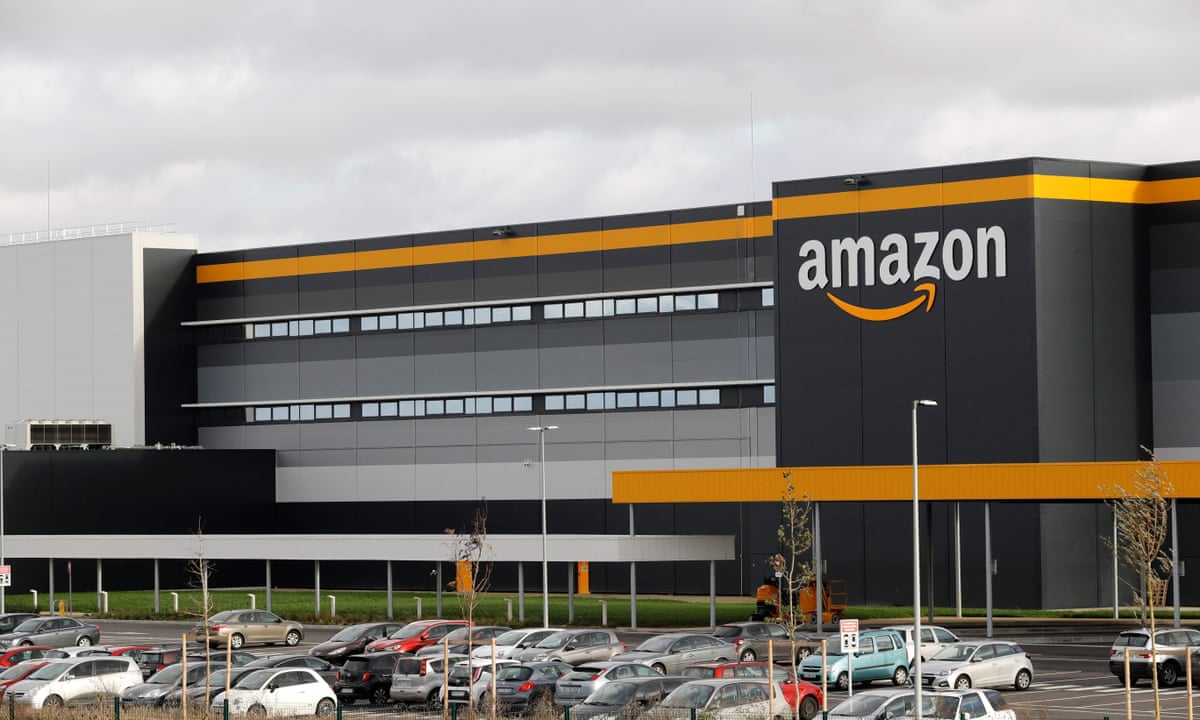
Amazon Books were just the beginning. expanded into music and DVDs, then electronics, then toys, then clothing, and eventually into virtually every product category imaginable. The shift from bookstore to everything store didn’t happen overnight, but it happened faster than most competitors could react to. By the time traditional retailers understood the threat, had already built infrastructure and customer loyalty that was nearly impossible to compete with.
The introduction of Amazon Prime in 2005 was a turning point that deserves special attention. At the time, paying an annual fee for free two-day shipping seemed like an odd proposition. But it fundamentally changed how people shopped. Prime members spent significantly more than non-members, visited the platform more frequently, and developed a loyalty that bordered on habit. What started as a shipping program became an entertainment service, a grocery delivery platform, and a digital ecosystem all rolled into one membership.
Amazon also pioneered third-party marketplace selling in a way that multiplied its product catalog exponentially without requiring the company to own all that inventory. By letting independent sellers list products on its platform, created a self-reinforcing flywheel where more sellers attracted more customers and more customers attracted more sellers. That model is now a cornerstone of how operates at a global scale.
Amazon Web Services and the Cloud Revolution
If Amazon the retailer is impressive, Web Services is in a different category entirely. AWS launched in 2006 as a way to offer computing infrastructure to businesses over the internet, and it quietly became one of the most profitable and strategically important businesses in the world. Today, AWS powers a staggering portion of the internet, from startups and small businesses to governments, hospitals, and Fortune 500 companies.
The genius of AWS is that it turned’s internal infrastructure investment into a product. The company had built massive server capacity to run its own operations, and Bezos realized that other businesses needed that same kind of computing power without the capital expense of building it themselves. That insight created an entirely new industry and gave a cash cow that funds much of its other ambitious ventures.
AWS consistently generates the majority of Amazon’s operating profit, even as the retail business operates on razor-thin margins. This gives the company a financial cushion that allows it to invest aggressively in new areas, absorb losses in competitive markets, and outspend rivals in ways that most businesses simply cannot match. Understanding AWS is essential to understanding why is so difficult to compete against across all its business lines.
Amazon and the Logistics Machine Behind Every Delivery
One of the most underappreciated aspects of is the sheer scale and sophistication of its logistics operation. has built one of the largest private delivery networks in the world, with hundreds of fulfillment centers, thousands of delivery vans, its own cargo airline fleet, and even experiments with drone delivery. The goal has always been the same: get products to customers faster and more reliably than anyone else.
The fulfillment center network is a marvel of modern engineering and operations. Robots and human workers operate side by side to pick, pack, and ship millions of orders every single day. has invested heavily in automation technology, and the results are visible in the speed and accuracy of its deliveries. Same-day and next-day delivery, which once seemed like a luxury, have become standard expectations for Prime members in major markets.
This logistics infrastructure also gives Amazon a significant advantage in areas like grocery delivery through Fresh and Whole Foods, which it acquired in 2017. The ability to integrate physical retail locations with a world-class delivery network creates possibilities that pure-play online retailers and traditional supermarkets alike struggle to replicate. is essentially building the infrastructure of modern commerce, and everyone else is figuring out how to operate within it.
Amazon’s Role in Entertainment and Media
Amz is not just a place to buy things. It’s also a major player in the entertainment industry through Prime Video, which has produced critically acclaimed original content and competes directly with Netflix, Disney Plus, and Apple TV Plus for viewer attention. The investment in original programming has been substantial, including acquiring the rights to produce a Lord of the Rings series for a reported budget of over a billion dollars.
Amazon Music, Audible, Kindle, and Twitch round out a media portfolio that gives the company touchpoints across reading, gaming, podcasting, and music streaming. Each of these services strengthens the Prime ecosystem and gives customers more reasons to stay inside the Amz universe rather than look elsewhere. It’s a strategy of ecosystem lock-in that mirrors what Apple and Google have done with their own platforms, but executed at the scale only Amz can manage.
The acquisition of MGM Studios in 2022 added a massive catalog of classic films and television content to Amz library, further strengthening Prime Video’s competitive position. understands that content is one of the most powerful tools for customer retention, and it has invested accordingly. The line between tech company and entertainment studio has completely blurred, and Amz is one of the main reasons why.
Criticism and Controversies Around Amazon
No honest discussion of Amazon is complete without acknowledging the serious criticisms that have followed the company throughout its rise. Labor practices at fulfillment centers have been a consistent source of controversy, with workers and advocacy groups raising concerns about demanding productivity quotas, workplace safety, and the difficulty of organizing unions. These are legitimate issues that deserve serious attention and have not been fully resolved.
Amazon has also faced scrutiny from regulators and lawmakers around the world who argue that its size and market power create unfair competitive conditions. The practice of using data from third-party sellers on its platform to inform decisions about own private label products has been particularly controversial and has drawn regulatory investigations in the US, Europe, and elsewhere.
Environmental concerns have also been raised, particularly around the carbon footprint of massive delivery network and the packaging waste generated by billions of shipments annually. Amazon has made public commitments to sustainability, including pledging to be net-zero carbon by 2040, but critics argue that the pace of change is too slow given the scale of the environmental impact. These tensions between growth and responsibility are ones Amz will need to navigate carefully in the years ahead.
What the Future Looks Like for Amazon
Amazon shows no signs of slowing down, and its future ambitions are as sweeping as anything it has done in the past. Healthcare is a major area of focus, with Amz acquisition of One Medical signaling a serious intent to disrupt primary care. Amz Pharmacy is already challenging traditional drugstores, and the company’s ability to apply its logistics and technology expertise to healthcare could genuinely transform how people access medical services.
Artificial intelligence is another frontier where Amazon is investing heavily. From Alexa to AWS’s AI services to internal automation, is embedding machine learning into virtually every part of its operation. The competition with Microsoft, Google, and other cloud providers in the AI space is fierce, but existing cloud infrastructure gives it a strong position from which to compete.
Internationally, Amazon continues to expand into markets where it sees long-term growth potential. India, in particular, is a massive focus, with investing billions to build out its presence in one of the world’s fastest-growing e-commerce markets. The competition there is intense, but has shown repeatedly that it is willing to play a very long game in markets it believes in.
Final Thoughts on Amazon’s Unstoppable Rise
Amazon is genuinely one of the most consequential companies ever built. It has changed how people shop, how businesses operate, how content is consumed, and how the internet itself is powered. The breadth and depth of its influence across so many different industries is without modern parallel, and understanding is really understanding a significant piece of how the contemporary world works.
The company is not without its flaws, and the scrutiny it faces from regulators, workers, and the public is both appropriate and necessary. But the ambition, the execution, and the relentless focus on the customer experience that has maintained across three decades of growth is something that any student of business, technology, or economics needs to take seriously. Amazon didn’t just build a company. It built the infrastructure of modern life, and that’s a legacy that will be studied and debated for generations to come.
You May Also Read