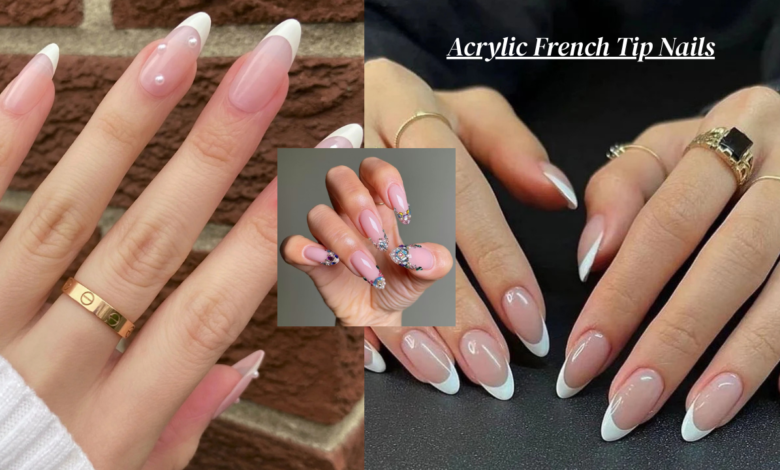
Acrylic French Tip Nails There is something timeless about a fresh set of acrylic French tip nails. Whether you are heading to a job interview, a wedding, or just want your hands to look polished on a Tuesday afternoon, French tips never seem to go out of style. They have been a nail salon staple for decades, and honestly, it is not hard to see why. That clean white tip against a natural or nude base has this understated elegance that works for almost every skin tone, every occasion, and every personal style. But with modern nail artistry taking things to a whole new level, the classic French tip has evolved far beyond what it used to be. Today, acrylic French tip nails come in so many variations, lengths, shapes, and design styles that calling them just a “French tip” almost feels like an understatement.
If you have been curious about getting acrylic French tip nails for the first time, or you are a long-time fan looking to refresh your knowledge and maybe try something new, this guide covers everything you need to know. From the basics of how they are applied to aftercare tips that will keep your set looking flawless for weeks, consider this your one-stop resource.
What Exactly Are Acrylic French Tip Nails
Before diving into the details, it helps to understand what separates acrylic French tip nails from other nail options out there. Acrylic nails are created using a combination of a liquid monomer and a powder polymer. When these two ingredients are mixed together, they form a malleable dough-like substance that a nail technician sculpts directly onto your natural nail or a nail form. Once exposed to air, the material hardens into a durable, solid extension that can be shaped, buffed, and polished just like a natural nail. The result is a strong, long-lasting set that can withstand daily wear far better than gel or press-on alternatives.
The French tip element refers specifically to the design style where the tip of the nail is painted or sculpted in white (or another contrasting color) while the base remains nude, pink, or sheer. This creates that iconic two-tone look that has defined classic nail aesthetics for generations. When you combine the durability of acrylics with the elegance of the French tip design, you get a set of nails that are not only beautiful but also built to last. That is a big part of why acrylic French tip nails remain one of the most requested salon services globally.
There are two primary methods for creating acrylic French tips. The first is the traditional painted method, where the nail technician applies a clear or nude acrylic base and then hand-paints the white tip using nail polish or acrylic paint. The second method involves using white acrylic powder at the tip during the sculpting process, which creates a more defined and often longer-lasting result. Both methods are valid, and the best choice depends largely on your personal preference and the skill level of your technician.
Shapes and Lengths Finding Your Perfect Fit

One of the most exciting parts of getting Acrylic French Tip Nails is choosing your shape and length. This is where things can go from classic to completely customized. The shape of your nails can dramatically change how your hands look overall, and the right combination of shape and length can actually make your fingers appear longer, more slender, or more defined. It is worth spending a few minutes discussing your options with your nail technician rather than just going with whatever feels familiar.
Square nails are probably the most traditional shape for French tips and give that bold, clean-cut look. They work particularly well for people with long nail beds. Oval and round shapes are great for creating the illusion of length and tend to feel more natural. Almond-shaped nails have become incredibly popular in recent years because they taper to a soft point, which elongates the fingers and gives the French tip a more modern, editorial feel. For the truly bold, stiletto and coffin shapes take French tip nails to a dramatic level that is hard to ignore.
When it comes to length, the general rule is to go as long as your lifestyle will reasonably allow. If you type a lot, work with your hands, or care for young children, extremely long nails might be more of a hassle than they are worth. Medium-length acrylic French tips tend to hit a sweet spot that looks glamorous without becoming impractical. That said, if you are going all out for a special event or just love the dramatic look of extra-long nails, there is absolutely nothing stopping you from going there.
Modern Twists on the Classic French Tip
If you think acrylic French tip nails are stuck in the 1980s, think again. The nail art world has completely reimagined what a French tip can look like, and the results are genuinely stunning. Contemporary nail artists are using the French tip format as a canvas for all kinds of creative expression. Colored French tips have become massively popular, where instead of the traditional white, technicians use shades like black, nude brown, soft lavender, baby blue, or even metallic gold. The contrast between the tip color and the base creates the same structured elegance, but with a fresh and personalized twist.
Reverse French tips are another trend that has taken off in a big way. This style flips the traditional layout, placing the accent color at the base of the nail near the cuticle rather than at the tip. It is unexpected, modern, and genuinely cool-looking.
Nail art details incorporated into French tips have also exploded in popularity. Think micro floral designs along the tip line, tiny gemstones placed at the smile line, chrome powder applied to the white tip for a mirror effect, or fine-line geometric patterns that give the look an almost architectural quality.
The Application Process What to Expect at the Salon
If this is your first time getting acrylic French tip nails, knowing what the process looks like can help you feel more comfortable walking into the salon. The appointment typically begins with your nail technician assessing your natural nails and discussing the length, shape, and design you want. Then, the surface of your natural nails is gently buffed to remove shine and create a slightly rough texture that allows the acrylic to adhere properly. A dehydrator and primer are applied to further prep the nail surface and prevent lifting down the line.
From there, the technician will either attach a plastic nail tip to extend your natural nail or use a nail form beneath the free edge to sculpt the extension from scratch. Forms are generally considered the more advanced technique and can produce a more seamless, natural-looking result. The acrylic mixture is then applied in careful strokes over the nail, building up the structure and shaping the extension. For French tips, white acrylic powder is applied to the tip area either at this stage or, alternatively, painted on after the clear or pink acrylic base has been filed and buffed smooth.
Once the acrylic has fully cured, the real finishing work begins. The technician files, shapes, and refines each nail to your desired specifications. The surface is buffed to a smooth finish, and a top coat is applied to seal everything and add shine. A full set of acrylic French tip nails typically takes between one and a half to two and a half hours, depending on the complexity of the design and the technician’s working pace. It is not the fastest process in the world, but the end result is absolutely worth the time investment.
Maintenance and Fills Keeping Your Nails Looking Fresh
One thing that first-time acrylic nail wearers sometimes do not anticipate is the maintenance involved in keeping their nails looking great. As your natural nails grow, a visible gap appears between the cuticle area and the base of the acrylic. This is completely normal and expected, but it is also the signal that you are due for a fill appointment. Most people find that they need a fill every two to three weeks, though this varies depending on how quickly your natural nails grow.
During a fill appointment, the technician will file down the surface of your existing acrylic, clean up the edges, and apply fresh acrylic product to fill in the growth gap near the cuticle. If your French tip design has grown out significantly or you want a new look, this is also a great time to make changes. Some people stick with the same classic white French tip for months, while others use every fill as an opportunity to try something new. Both approaches are totally valid.
It is also worth noting that proper maintenance is not just about aesthetics. Neglecting to fill your acrylics on time can actually lead to issues like lifting, which creates pockets of space between the acrylic and your natural nail where moisture and bacteria can become trapped. This is not something you want to deal with. Staying on a regular fill schedule, keeping your nails dry when possible, and using cuticle oil daily will go a long way toward keeping your acrylic French tip nails healthy and beautiful for the long haul.
Removal The Right Way to Take Off Acrylic Nails
When the time comes to part ways with your acrylic French tip nails, it is extremely important to have them removed properly. The biggest mistake people make is attempting to peel or force off their acrylics at home. This is one of the fastest ways to cause serious damage to your natural nails, as the layers of your nail plate often come off along with the acrylic. The result is thin, weak, damaged nails that will take months to recover. Please, do not do this to yourself.
The correct removal method involves soaking the nails in pure acetone until the acrylic softens enough to gently scrape or push off. This process takes time, usually between twenty and forty-five minutes depending on the thickness of your acrylic set.
Tips for Choosing the Right Nail Salon
Not all nail salons are created equal, and the quality of your acrylic French tip nails has a lot to do with the skill of the technician applying them. When you are looking for a salon, it pays to do a little research beforehand. Look at online reviews and pay attention to what people say specifically about acrylic work and nail health.
Hygiene and sanitation standards should also be a top priority when choosing a nail salon. Make sure the salon uses properly sterilized tools, fresh files for each client, and that technicians are not using MMA (methyl methacrylate) in their acrylic products.
Finally, do not underestimate the value of simply feeling comfortable with your nail technician. Good communication is key to getting exactly what you want. Bring reference photos, be specific about your preferences, and do not hesitate to speak up during the process if something does not look right.
Final Thoughts
Acrylic French tip nails have stood the test of time for a reason. They are elegant, versatile, and endlessly adaptable to whatever aesthetic or mood you are going for. Whether you are a purist who loves the original white-tip-on-nude-base look, or someone who wants to take the concept in a bolder, more artistic direction, there is genuinely something for everyone within the world of French tip acrylic nails.
Taking care of your nails both during and between sets is what will make the difference between a pleasant experience and a damaging one. Stay on top of your fills, use cuticle oil daily, choose a reputable salon with skilled technicians, and always opt for professional removal when the time comes. Do all of that, and your acrylic French tip nails will consistently look as good on week three as they did on day one.
You May Also Read