What Time Will It Be in 15 Minutes from Now? A Simple Question with More Depth Than You Think

We’ve all been there — you’re in the middle of something, and you need to figure out what time will it be in 15 minutes from now it’ll be in just 15 minutes. Maybe you’re timing a quick nap, waiting for something to finish cooking, or trying to catch a bus. It sounds like the simplest question in the world, and in most cases, it is. But there’s actually a surprising amount of nuance packed into this everyday calculation — from how time zones work to mental math tricks to the quirky way our brains perceive short intervals of time. Let’s break it all down.
How to Quickly Calculate 15 Minutes from the Current Time
The most straightforward way to answer what time will it be in 15 minutes from now is basic addition. Take the current time and add 15 minutes to the minutes column. If the current time is 3:40 PM, then 15 minutes later it will be 3:55 PM. Easy enough, right? The only part where people occasionally trip up is when the minutes roll over past 60.
For example, if it’s currently 4:50 PM and you add 15 minutes, you don’t get 4:65 PM — that’s not a real time. Instead, you carry over. 50 + 15 = 65, which means you subtract 60 from the minutes and add 1 to the hour, giving you 5:05 PM. It’s the same logic that makes clock arithmetic feel slightly different from regular math, but once you get the hang of it, it becomes second nature.
Another trick that helps is thinking in quarter-hours. A standard clock face is divided into four quarters of 15 minutes each. So if the minute hand is pointing at the 12 (i.e., it’s the top of the hour), 15 minutes later it’ll be pointing at the 3. If it’s pointing at the 3 (quarter past), add 15 and it lands on the 6 (half past). This visual approach works incredibly well for people who still glance at analog clocks, and it can speed up mental calculations without doing any arithmetic at all.
Why Does This Question Come Up So Often in Daily Life?

You might not think of what time will it be in 15 minutes from now as a particularly deep question, but the reality is that it comes up constantly throughout the day. We use this kind of quick time calculation when setting reminders, estimating how long we have before a meeting, figuring out when to take medication, or even just managing something as mundane as pasta on the stove.
Fifteen minutes is also one of those psychologically significant chunks of time. It’s long enough to feel meaningful — enough time to make a quick phone call, finish a short task, or take a power walk around the block — but short enough that most people don’t bother setting a formal timer. Instead, they do the mental math, glance at the clock, and carry on. This makes the 15-minute calculation one of the most common informal time estimations we perform throughout the day.
There’s also a professional side to this. In environments like healthcare, manufacturing, and logistics, tracking 15-minute intervals can be critical. Nurses track medication schedules down to the quarter-hour. Factory workers log shift times in 15-minute blocks. Event coordinators build schedules where every quarter-hour counts. In these contexts, knowing exactly what time it will be in 15 minutes isn’t just a casual question — it’s a matter of precision and accountability.
The Role of Time Zones When Answering What Time Is It Right Now?
What time will it be in 15 minutes from now Before you can figure out what time it’ll be in 15 minutes, you first need to know what time it actually is right now — and that’s where time zones add a layer of complexity. The world is divided into 24 primary time zones, each roughly one hour apart, though several countries use half-hour or even quarter-hour offsets. India, for instance, is UTC+5:30, and Nepal uses UTC+5:45.
If you’re traveling, working remotely with international teams, or just trying to call someone overseas, you need to anchor your current time to the right time zone before doing any forward calculation. Tools like your phone’s world clock, Google, or dedicated apps like Time Zone Converter handle this effortlessly. Once you know the correct local time, adding what time will it be in 15 minutes from now is the same process no matter where in the world you are.
It’s also worth noting that Daylight Saving Time (DST) can occasionally cause confusion. When clocks spring forward or fall back, the “current time” shifts by an hour, which can throw off people who haven’t updated their clocks. During these transitions, double-checking your device’s time — especially if it auto-adjusts — is always a smart move before making any time-sensitive plans.
Digital Tools That Calculate Future Times Instantly
What time will it be in 15 minutes from now In the age of smartphones, figuring out what time it’ll be in 15 minutes has never been easier. A quick voice command to Siri, Google Assistant, or Alexa — something like “What time will it be in 15 minutes?” — will get you an instant answer. These assistants pull the current local time from your device and do the addition for you in under a second.
Beyond voice assistants, there are countless online tools and apps designed specifically for time calculations. Websites like timeanddate.com allow you to input a current time and add any number of minutes, hours, or even days to get an accurate future time. These tools are especially useful in professional or planning contexts where precision matters and you don’t want to risk a mental math error.
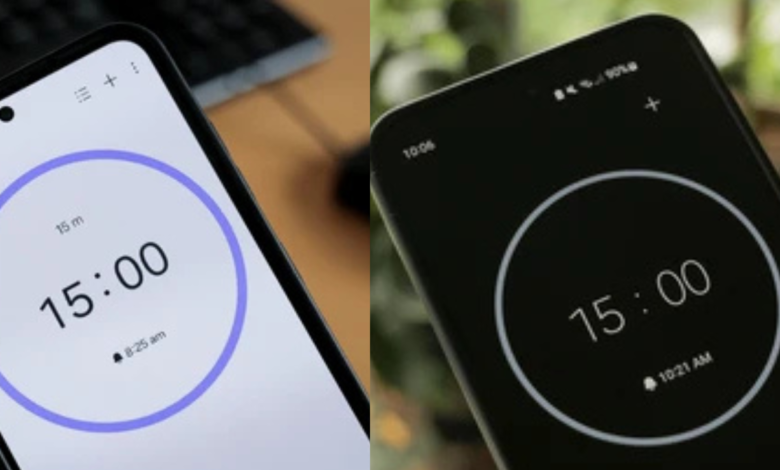
Your phone’s built-in clock app also has a timer feature that works wonderfully for this purpose. Instead of calculating the future time yourself, you can simply set a what time will it be in what time will it be in 15 minutes from now and let it count down. When it goes off, you know exactly 15 minutes have passed. This is arguably the most practical approach for situations where you just need to be notified at the 15-minute mark rather than knowing the specific clock time.
How Our Brains Perceive 15 Minutes (and Why We’re Often Wrong)
Here’s something interesting — our subjective experience of what time will it be in 15 minutes from now varies wildly depending on what we’re doing. When you’re deeply absorbed in an engaging task, 15 minutes can feel like it flew by in a blink. When you’re bored, waiting in line, or doing something tedious, those same 15 minutes can feel like an hour. This phenomenon is called time perception, and it’s a well-studied area of cognitive psychology.
The reason for this discrepancy lies in how our brains allocate attention. When we’re focused and engaged, our brain isn’t constantly “checking in” on the passage of time, so we lose track of it. But when we’re doing nothing stimulating, the brain has more idle cycles to notice each moment passing by — making the wait feel much longer. What time will it be in 15 minutes from now of scrolling social media feels instant, while 15 minutes of sitting in a doctor’s waiting room feels like an eternity.
For people who rely on time estimation in their daily lives — athletes, musicians, meditators, and even cooks — training your internal clock is a real skill. Regular practice with timed tasks, mindfulness exercises, and deliberate attention to time intervals can sharpen your sense of how long 15 minutes actually feels. Some people become surprisingly accurate at estimating quarter-hour intervals without ever checking a clock, simply by developing a stronger awareness of their own temporal perception.
Practical Scenarios Where Knowing 15 Minutes Ahead Matters
What time will it be in 15 minutes from now Let’s get into some real-world situations where calculating 15 minutes into the future is genuinely useful. One of the most common is cooking. Recipes are filled with timed steps — boil for 10 minutes, bake for 25, let rest for 15. Knowing that you put the chicken in at 6:30 PM means it’ll be done at 6:45 PM. That kind of forward thinking helps you coordinate side dishes, set the table, and call everyone to dinner at just the right moment.
Commuting is another area where 15-minute awareness comes in handy. If your train leaves at 8:15 AM and it’s currently 8:00 AM, you have exactly 15 minutes to grab your bag, get out the door, and walk to the station. Many people use this mental calculation habitually, and it becomes a natural part of their morning routine. Transit apps and Google Maps also use this logic when they show you departure times and walking estimates.
In healthcare, the what time will it be in 15 minutes from now window is particularly significant. Many medications are timed in quarter-hour increments, and certain procedures require monitoring vitals every 15 minutes. Caregivers and nurses develop a strong instinct for this interval, often without needing to check a watch every single time. Understanding and anticipating what time it will be in 15 minutes is, in these contexts, a core professional competency — not just a casual convenience.
Tips for Getting Better at Mental Time Math
If you find yourself reaching for a calculator every time you need to add what time will it be in 15 minutes from now to a time, don’t worry — it’s a skill you can sharpen with just a little practice. One of the easiest methods is to simply memorize the rollover points. Know that adding 15 to any minute value above 45 will push you into the next hour, and know exactly where that lands (e.g., :46 + 15 = :01 next hour, :50 + 15 = :05 next hour, etc.).
Another useful technique is to break the calculation into smaller steps. Instead of adding 15 minutes all at once, add 10 first and then add 5 more. This two-step method is often easier for people who struggle with carrying over across the hour mark. For instance, if it’s 7:52 PM, add 10 to get 8:02 PM, then add 5 more to get 8:07 PM. Done.
You can also practice throughout the day as a low-effort mental exercise. Every time you glance at a clock, take a split second to calculate what time it’ll be in what time will it be in 15 minutes from now. Over a few days, this becomes almost automatic, and your mental arithmetic around time intervals gets noticeably sharper. It’s a small habit with a surprisingly useful payoff — especially in situations where you can’t pull out your phone.
Conclusion It’s a Small Question That Keeps Your Day on Track
What time will it be in 15 minutes from now? might sound like a throwaway question, but it’s one that quietly keeps our days organized, our schedules intact, and our routines running smoothly. Whether you’re a professional who tracks time in precise increments or just someone trying not to burn dinner, the ability to quickly and accurately calculate 15 minutes into the future is a genuinely practical skill.
From mental math tricks to digital tools, from time zone awareness to the psychology of time perception, there’s more to this simple question than meets the eye. what time will it be in 15 minutes from now The good news is that once you understand the mechanics and sharpen your instincts a little, it becomes one of those things you just know — no calculator required. So the next time someone asks you what time it’ll be in 15 minutes, you’ll have the answer ready before they finish the sentence.
You May Also Read