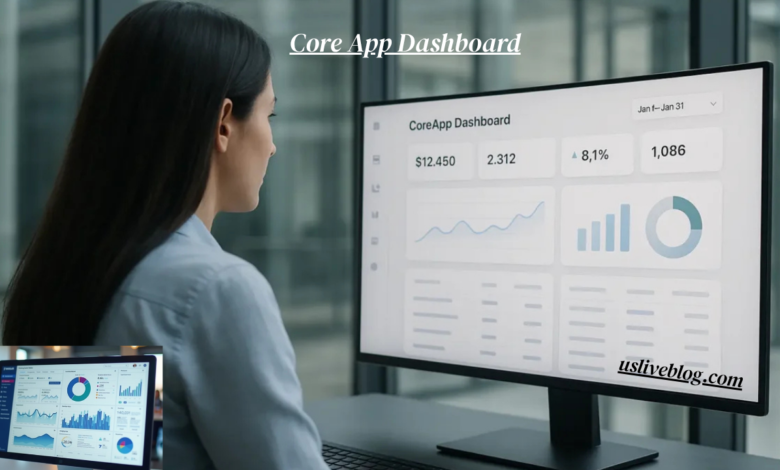
Core App Dashboard If you’ve ever opened an app and immediately knew where everything was that’s a well-designed doing its job quietly in the background. It’s one of those things users don’t notice when it works, but absolutely notice when it doesn’t. The core app dashboard is essentially the command center of any digital product. It’s where data meets design, where functionality meets usability, and where first impressions are either won or lost. Whether you’re building a SaaS platform, a mobile app, or an enterprise tool, getting your right isn’t optional it’s the whole game.
What Exactly Is a Core App Dashboard
A core app dashboard is the central interface that greets users when they log into an application. It aggregates the most important information, tools, and navigation options into a single, digestible view. Think of it as the home base — everything a user needs to understand their current status, take action, or explore further should either live on the or be one click away from it.
What separates a core app dashboard from just any screen is intentionality. It’s not a dumping ground for every feature the product team thought was cool. It’s a carefully curated experience that reflects what the user actually needs to accomplish. A well-built answers three questions at a glance: Where am I? What’s happening? What should I do next?
The best core app dashboards feel almost invisible — they guide users naturally without making them think too hard. That’s the paradox of great dashboard design. The more effort that goes into building it, the more effortless it should feel to use. And that balance is exactly why so many teams get it wrong on the first try.
Why the Core App Dashboard Matters More Than You Think

Here’s the thing a lot of product teams overlook the Core App Dashboard is often the most visited screen in any application. Users might explore settings once, visit a profile page occasionally, but they return to the dashboard every single session. That repetition makes it uniquely powerful and uniquely consequential.
A poorly designed core app dashboard leads to real business problems. Users get confused, they can’t find what they need, they lose trust in the product, and eventually they churn. On the flip side, a dashboard that’s clean, informative, and responsive builds user confidence fast. People feel like they’re in control, and that feeling keeps them coming back.
From a business metrics standpoint, the core app dashboard directly influences engagement rates, session duration, and feature adoption. When key features are surfaced intelligently on the dashboard, users discover and use them more often. When the dashboard is cluttered or unintuitive, those same features get ignored even if they’re genuinely useful. This is why investing in dashboard UX isn’t just a design decision — it’s a product strategy decision.
Key Elements Every Core App Dashboard Should Have
Not every dashboard looks the same, and that’s fine. But there are certain foundational elements that every strong core app dashboard shares, regardless of industry or use case.
Navigation is the backbone. A solid gives users a clear sense of the full product structure without overwhelming them. Whether it’s a sidebar, a top nav, or a bottom tab bar on mobile, the navigation should be consistent, labeled clearly, and never more than one level deep for primary actions.
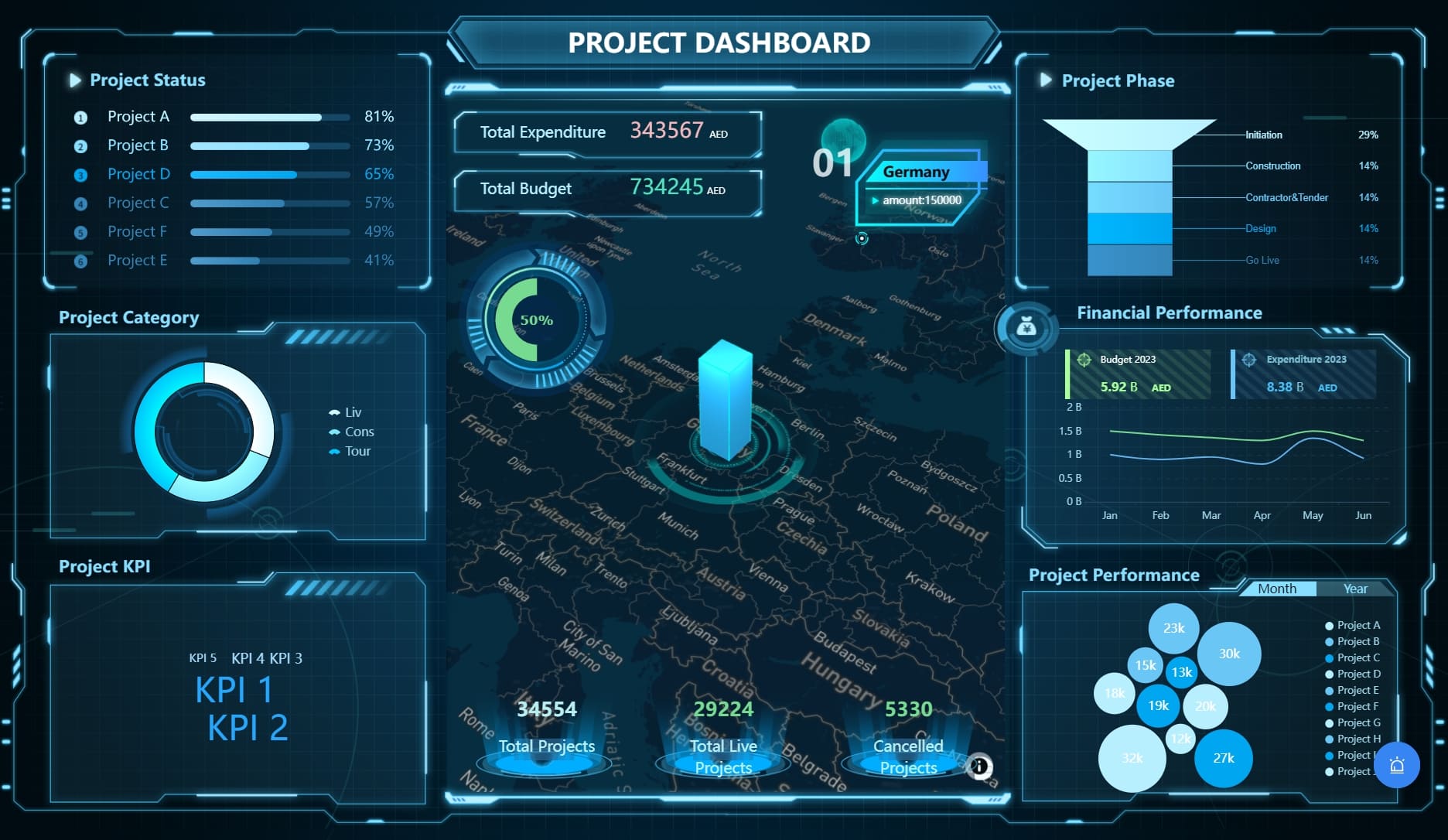
Data visualization is where dashboards shine. Charts, graphs, progress bars, and summary cards allow users to consume complex information at a glance. The trick is relevance — every visual element on a core app dashboard should represent data the user actually cares about, not data that just looks impressive in a demo.
Quick actions are the hidden heroes of any app dashboard. These are buttons or shortcuts that let users do the most common tasks without navigating away. If your analytics show that 60% of users log in to do one specific thing, that thing should be actionable from the dashboard in two clicks or fewer. Speed and convenience are what turn casual users into power users.
Common Mistakes Teams Make When Designing a Dashboard
Designing a core app dashboard sounds straightforward until you’re actually doing it — then the complexity hits. One of the most common mistakes is information overload. Teams want to show everything because they’re proud of their features, but a dashboard crammed with widgets, numbers, and charts just creates cognitive noise. Users glaze over and miss the things that actually matter.
Another frequent mistake is designing the core app dashboard for the product team rather than the end user. Internal stakeholders might love seeing every metric tracked, but real users just want to know what’s relevant to them right now. This is where user research becomes non-negotiable. Talking to actual users about what they want to see first thing when they log in will always produce better results than guessing.
Neglecting mobile responsiveness is also a massive oversight in today’s landscape. A app dashboard that looks stunning on a desktop but falls apart on a phone is only half a dashboard. With mobile usage consistently rising across nearly every app category, the dashboard experience has to be designed with small screens in mind from day one — not bolted on as an afterthought.
How to Personalize the Core App Dashboard Experience
Personalization is where modern core app dashboards are really starting to separate themselves from the pack. Generic dashboards show the same thing to every user. Smart dashboards adapt based on role, behavior, preferences, and history — and that difference is enormous.
Role-based dashboards are a great starting point. A for an admin user should look different from one designed for a regular end user. Admins need system-level data, user management tools, and broad overviews. Regular users need task-specific information and quick access to their personal workflow. Building role-based views into the core app dashboard architecture early saves a lot of painful refactoring later.
Behavioral personalization goes even further. By tracking how users interact with the core app dashboard over time, you can surface the features they use most, hide the ones they never touch, and even proactively show relevant information before they go looking for it. This kind of intelligent adaptation makes users feel like the product was built specifically for them — and that emotional connection is incredibly powerful for retention.
Performance and Speed The Overlooked Dimension
A core app dashboard can be beautifully designed, perfectly personalized, and still completely fail if it loads slowly. Performance is non-negotiable. Users have zero patience for dashboards that take three seconds to render, especially if they’re logging in multiple times per day.
Optimizing a core app dashboard for speed involves several layers. On the frontend, lazy loading ensures that only the visible elements load first, with additional content fetching in the background. Caching strategies mean returning users don’t have to wait for data they’ve already seen to reload from scratch. On the backend, efficient API design and smart data aggregation prevent the dashboard from making dozens of separate calls just to populate a single screen.
The performance of a core app dashboard also affects SEO for web-based applications and app store ratings for mobile products. Slow experiences get reviewed poorly, and poor reviews shrink your user base. Speed isn’t glamorous to design for, but it’s absolutely foundational to dashboard success.
Iteration The Core App Dashboard Is Never Truly Finished
Here’s something every experienced product person knows a core app dashboard is never really done. It evolves as the product grows, as user needs shift, and as new data reveals what’s actually working versus what looked good in a mockup.
Building a strong feedback loop into your dashboard development process is critical. Usage analytics tell you which sections get the most attention and which get ignored. Heatmaps show you where users are clicking and where their eyes are going. User interviews surface frustrations that no amount of data can fully capture. All of this feeds back into continuous improvement of the core app dashboard.
The teams that build the best dashboards treat them as living products, not launched features. They run A/B tests on layout changes, they monitor load times obsessively, and they stay close to their users consistently. That ongoing commitment is what separates dashboards that stay effective for years from ones that feel outdated six months after launch.
Final Thoughts
The core app dashboard is the heartbeat of any digital product. It’s the first thing users see, the screen they return to most often, and the clearest reflection of how well a product team understands its audience. Getting it right requires thoughtful design, smart personalization, technical performance, and a genuine commitment to continuous improvement.
If you treat the core app dashboard as just another screen, you’ll build just another forgettable product. But if you treat it as the strategic center of your user experience — the place where everything important lives and every session begins — you’ll build something users actually love coming back to. And in a world full of apps competing for attention, that kind of loyalty is everything.
You May Also Read