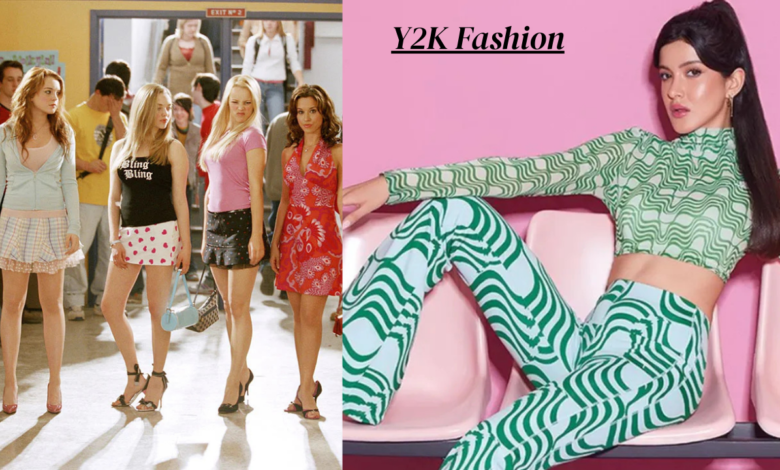
What Exactly Is Y2K Fashion
Y2K fashion refers to the clothing, accessories, and overall aesthetic that dominated popular culture from roughly 1998 to 2004. The name comes from the “Year 2000” tech scare, and the style itself was deeply tied to the era’s obsession with futurism, pop music, and a kind of carefree optimism that felt very specific to that moment in time. Think low-rise jeans, butterfly clips, bedazzled everything, metallic fabrics, and tiny sunglasses that barely covered your eyes. It was bold, it was maximalist, and honestly, it was a whole vibe.
What made Y2K fashion so distinct was its unapologetic attitude. Nothing was too shiny, too colorful, or too small. Mini skirts were paired with platform boots. Crop tops were worn with low-slung cargo pants. Velour tracksuits became somehow both casual and glamorous at the same time. The whole aesthetic was built around the idea that fashion should be fun, flashy, and a little bit over the top — and that philosophy is exactly what makes it so magnetic to a new generation discovering it for the first time.
It is worth pointing out that Y2K fashion was not a single unified look. It pulled from multiple subcultures simultaneously — pop star glam, streetwear, rave culture, and even a bit of sci-fi futurism all mixed together. That eclecticism is part of why it is so easy to reinterpret and remix today. You can take one element, like the butterfly motif or the low-rise silhouette, and build an entirely modern outfit around it without going full costume mode.
The Key Pieces That Defined the Y2K Look
If you want to understand Y2K fashion, you have to start with the staple pieces. Low-rise jeans are probably the most talked-about item from this era, and for good reason — they were everywhere. Whether it was flared denim with a slight sheen, distressed bootcut styles, or ultra-low micro jeans that barely cleared the hips, the silhouette was consistent. Paired almost always with a crop top or a fitted baby tee, the look was about showing skin while still appearing effortlessly casual.
Metallics and iridescent fabrics were another massive part of the aesthetic. Silver holographic mini skirts, shiny vinyl trousers, and foil-print tops were all staples of the Y2K wardrobe. The fashion world was genuinely captivated by anything that looked like it came from the future, and that translated into fabrics that caught the light in unusual ways. Even everyday items like handbags and shoes got the metallic treatment, and the result was a kind of head-to-toe shimmer that felt perfectly suited to the era.
Accessories were just as important as clothing in building a full Y2K look. Tiny handbags that could barely fit a phone, layered chain necklaces, chunky platform sneakers, tinted visor sunglasses, and hair accessories like butterfly clips and bandanas were all part of the package. The accessories were often the loudest part of the outfit, and no look was truly complete without at least a few of them stacked together. More was always more in this era, and that principle applied to every layer of the wardrobe.
Why Y2K Fashion Came Roaring Back

Y2K Fashion has always been cyclical, but the Y2K revival has been particularly intense. A lot of it comes down to timing. The generation that was born in the late 1990s and early 2000s is now in its early to mid-twenties, which is exactly the age when people typically start to feel nostalgic for the aesthetics of their early childhood. There is something deeply comforting about revisiting the visual language of a time when the world felt simpler, and for Gen Z, Y2K represents a kind of warm, pixelated nostalgia they never fully experienced but feel a strong pull toward.
Social media platforms, particularly TikTok and Instagram, accelerated the revival dramatically. Once a few influential creators started incorporating Y2K pieces into their outfits, the algorithm did the rest. Thrift store hauls featuring low-rise jeans went viral. Tutorials on how to style butterfly clips got millions of views. The visual nature of these platforms made Y2K an ideal aesthetic to spread quickly because the looks are so immediately recognizable and so easy to replicate with affordable pieces found at secondhand shops or fast fashion retailers.
There is also a cultural dimension to the revival that goes beyond pure aesthetics. The early 2000s were, in many ways, a period of genuine pop cultural optimism. The music was huge, the celebrities were omnipresent, and there was a sense that mainstream culture was fun and accessible. Revisiting that era through fashion is partly a way of recapturing that mood, or at least the idea of it. In a time when the world feels heavier and more complicated, the playfulness of Y2K style offers a kind of release.
How to Wear Y2K Fashion Without Looking Like a Halloween Costume
The biggest mistake people make when trying to tap into Y2K fashion is going too literal with it. Wearing every single element of the era all at once — the low-rise jeans, the velour top, the tinted visor, the platform flip-flops, and the butterfly clips — ends up looking more like a theme party than a genuine style choice. The key to making Y2K work in a modern context is restraint. Pick one or two signature elements and build the rest of the outfit around contemporary basics.
A great starting point is focusing on silhouette. Low-rise bottoms, whether jeans, skirts, or trousers, are the most defining shape of the era and can be styled in a way that feels current rather than dated. Pair them with a fitted top that is not too aggressively Y2K — a ribbed tank or a simple baby tee works perfectly — and the result is a look that reads as fashion-forward without being a costume. Add one statement accessory, like a chunky belt or a pair of platform sneakers, and you have hit the sweet spot.
Color is another powerful tool for tapping into the aesthetic without overdoing it. The Y2K palette leaned heavily into pastels, bright pinks, electric blues, lime greens, and warm oranges. Incorporating those colors into a modern outfit through a single statement piece — a pastel faux-fur jacket, a bright pink mini skirt, or a pair of lime green accessories — immediately signals the aesthetic without requiring you to commit to the full look. Color is also one of the easiest ways to update the trend seasonally, swapping out individual pieces while keeping the overall Y2K energy intact.
Y2K Fashion Icons Who Shaped the Aesthetic
You cannot talk about Y2K fashion without acknowledging the celebrities who defined it. Pop stars and actors of the era were essentially walking mood boards, and their choices shaped what millions of people wore on a daily basis. The aesthetic was being pushed forward through music videos, red carpet appearances, and paparazzi photos that got plastered across every teen magazine in print at the time. These celebrities were not just wearing trends — they were creating them, often in collaboration with stylists who understood exactly how to translate the era’s energy into clothing.
The influence of pop music on Y2K fashion cannot be overstated. The performers who dominated charts during this period used their visual presentation as a core part of their brand identity. Outfits worn in music videos became iconic almost immediately, and fans rushed to find affordable versions of everything they saw. The relationship between music and fashion during this era was more direct and immediate than it had ever been before, partly because of the rise of dedicated music video channels and entertainment news coverage that brought celebrity style directly into homes.
Reality television also played a significant role in shaping Y2K fashion. As the early 2000s saw an explosion of reality programming, the people who appeared on these shows became style influences in their own right. Their wardrobes were aspirational in a more accessible way than high fashion ever managed to be — these were regular people, or at least people presented as regular, wearing clothes that viewers could actually find and afford. That democratization of style influence was genuinely new at the time, and it helped cement certain Y2K looks as truly mass-market trends.
Shopping for Y2K Fashion Vintage vs. New
One of the most interesting aspects of the Y2K revival is how it has shaped the secondhand fashion market. Thrift stores and vintage resale platforms have seen a genuine surge in demand for early 2000s pieces, and prices have responded accordingly. What was once a cheap rack filler — a rhinestone-studded tank top, a pair of flared velvet trousers, or a tiny denim mini skirt — is now a desirable piece that people actively hunt for. The thrill of the thrift hunt has become part of the Y2K experience for a lot of younger shoppers.
For those who prefer new clothing, the mainstream fashion industry has responded enthusiastically to the Y2K revival. High-street retailers and fast fashion brands have both leaned into the trend, producing updated versions of low-rise jeans, metallic fabrics, and Y2K-inspired accessories at accessible price points. Higher-end designers have also revisited the aesthetic in their collections, reinterpreting signature Y2K shapes and details through a more premium lens. The result is that Y2K fashion is available at virtually every price point, from thrift store finds under a dollar to designer pieces costing hundreds.
There is a real argument to be made for sourcing Y2K pieces secondhand wherever possible. Beyond the obvious cost savings, buying vintage is genuinely more sustainable than buying new, and there is an authenticity to wearing an actual piece from the era rather than a contemporary reproduction of it. Original Y2K pieces often have details — specific hardware, unusual fabric treatments, particular cuts — that modern reproductions do not quite capture. For anyone who wants to engage with the aesthetic seriously, building a collection of genuine vintage pieces alongside a few well-chosen new items is probably the most satisfying approach.
Y2K Fashion and Its Impact on Modern Streetwear
The influence of Y2K fashion on contemporary streetwear is impossible to miss once you start looking for it. The chunky sneaker trend that dominated streetwear for years drew directly from the platform shoe aesthetic of the early 2000s. The popularity of branded tracksuits in streetwear culture echoes the velour sets and logomania that defined Y2K dressing. Even the current obsession with bold, eye-catching colorways in streetwear apparel has roots in the maximalist color philosophy of the early 2000s fashion world.
Logomania, which became a major trend in contemporary fashion, owes a significant debt to the Y2K era. The early 2000s were a golden age for visible branding — putting a designer’s name or logo front and center on clothing and accessories was considered aspirational and desirable rather than tacky. That philosophy went out of fashion for a period when minimalism took over, but it has come back with real force, and the Y2K revival has helped make bold, visible branding feel fresh and exciting again rather than dated.
Perhaps most importantly, Y2K fashion has helped shift the overall mood of contemporary dressing back toward fun and self-expression. For much of the 2010s, fashion trended toward a kind of restrained, normcore aesthetic where blending in was the point. Y2K pushes hard in the opposite direction — it celebrates standing out, being seen, and using clothing as a form of self-celebration. That shift in attitude is influencing designers, stylists, and everyday dressers alike, and it is making the fashion landscape considerably more colorful and joyful as a result.
Is Y2K Fashion Here to Stay or Just Another Trend Cycle
Every fashion revival eventually faces the same question: is this a lasting shift or just a momentary nostalgia trip? With Y2K, the answer is probably somewhere in the middle. Certain elements of the aesthetic — particularly the low-rise silhouette and the appetite for bold color and maximalist accessorizing — have embedded themselves deeply enough in the broader fashion conversation that they are likely to remain relevant for years. Other elements, like the most extreme iterations of the micro-mini or the most aggressively futuristic metallic fabrics, will probably cycle out as the nostalgia peak passes.
What is certain is that Y2K fashion has already had a lasting impact on how the current generation thinks about personal style. It has introduced a generation of young people to the pleasures of dressing with intention, of using clothing to project a specific mood or identity, and of looking to the past for inspiration rather than always chasing the newest thing. Those are lessons that tend to stick around even after the specific trend that taught them has moved on.
At the end of the day, the reason Y2K fashion keeps resonating is that it represents something people genuinely want from their wardrobes right now — permission to be playful, to take up space visually, and to treat getting dressed as a creative act rather than just a practical one. Whether you go all in with a full early-2000s inspired look or just add a single butterfly clip to an otherwise modern outfit, engaging with the Y2K aesthetic is ultimately about embracing a more joyful approach to fashion. And honestly, that never really goes out of style.
You May Also Read