Barchart Grains Your Complete Guide to Reading Understanding and Trading the Grain Markets

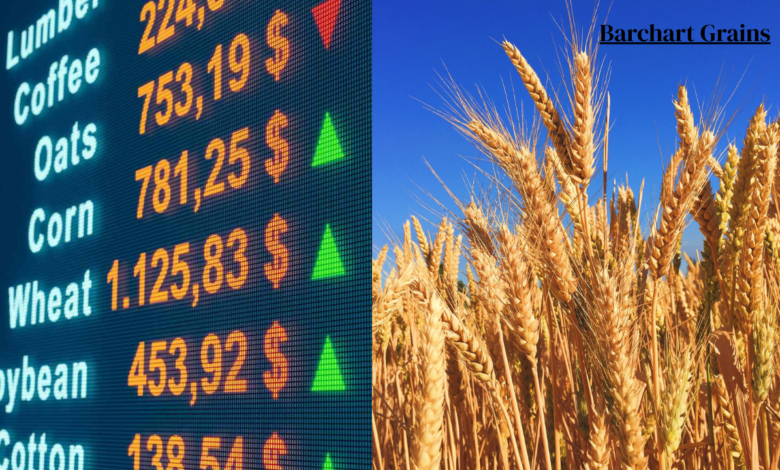
Barchart Grains If you’ve spent any time around commodity trading or agricultural markets, you’ve probably come across the term barchart grains more than a few times. And honestly, if you haven’t dug into what it actually means and how it works, you’re leaving a lot of value on the table. Whether you’re a seasoned futures trader, a farmer trying to hedge your next harvest, or just someone curious about how the global grain market ticks, understanding barchart grains is one of those fundamentals you really can’t afford to skip.
This guide is going to walk you through everything what barchart grains are, how to read and interpret the data, why it matters, and how traders and agricultural professionals use this information to make smarter decisions every single day.
What Are Barchart Grains
At its core, “barchart grains” refers to the price charts and market data tools used to track and analyze grain commodity prices — most commonly on platforms like Barchart.com. Barchart is one of the most widely used financial data platforms in the agricultural sector, and its grain section covers the full spectrum of major crops including corn, soybeans, wheat, oats, rough rice, and more.
The term itself is a combination of two concepts: the “barchart” charting format (which uses vertical bars to represent price movement over a given time period) and the specific commodity class — grains. Together, they form a tool that gives market participants a clear visual and numerical picture of how grain prices are moving, where they’ve been, and potentially where they might be headed.
What makes this platform particularly valuable is that it doesn’t just spit out raw price numbers. Barchart aggregates futures prices, spot prices, options data, technical indicators, historical charts, and even news and commentary — all in one place. For anyone involved in grain markets, having that level of consolidated information is genuinely a game-changer.
Why Grain Markets Matter More Than You Think
Barchart Grains A lot of people outside the agricultural world tend to underestimate just how significant grain markets are on a global scale. Grains are not just food — they’re the backbone of entire economies, supply chains, and even geopolitical relationships. The price of corn affects everything from livestock feed costs to ethanol production. Wheat prices ripple through the global bread supply. Soybeans drive trade negotiations between some of the world’s biggest economies.
When you look at barchart grains data, you’re not just looking at what a bushel of corn costs today. You’re looking at a living, breathing reflection of global supply and demand dynamics, weather patterns in key growing regions, currency fluctuations, export demand, government policy changes, and speculative positioning by large institutional traders.
This is why agricultural professionals, commodity traders, food processors, and even policy analysts check grain market data regularly. Understanding price trends and volatility helps businesses manage risk, plan purchases or sales, and stay ahead of market shifts. Ignoring grain market data in an agri-business environment is a bit like running a restaurant without ever checking your food costs — you might survive for a while, but it’s not a sustainable strategy.
Grain prices also have a downstream effect on inflation. When grain costs spike, the cost of everything from animal products to packaged goods tends to follow. Central banks and economists keep a close eye on commodity grain prices precisely for this reason.
How to Read Barchart Grains Data Like a Pro
Reading barchart grains data effectively is part skill, part practice. The good news is that the core concepts are pretty straightforward once you get comfortable with the terminology and the visual layout of the charts.
The most fundamental element is the price bar itself. On a standard bar chart, each vertical bar represents the trading activity for a specific time period — whether that’s a day, a week, or an hour. The top of the bar shows the high price reached during that period, the bottom shows the low, a small horizontal tick on the left side indicates the opening price, and a tick on the right side shows the closing price. Just from that single bar, you can tell how much volatility there was, which direction the market moved, and how the session ended relative to where it started.
Beyond the individual bars, traders look at broader patterns over time. Uptrends, downtrends, support levels, resistance levels — these are concepts that apply just as much to corn futures as they do to stock charts. A market that keeps making higher highs and higher lows is in an uptrend. One that keeps failing to break through a certain price ceiling is showing strong resistance at that level, which might signal a potential reversal.
Barchart Grains also layers in technical indicators directly onto the grain charts. Moving averages are among the most commonly used — a 50-day or 200-day moving average helps smooth out short-term noise and gives a cleaner view of the overall trend direction. Momentum indicators like the Relative Strength Index (RSI) help identify whether a market is overbought or oversold. Volume data, which shows how many contracts were traded in a given period, adds another layer of confirmation to price moves — a big price move on high volume is generally more significant than the same move on thin volume.
One particularly useful feature in the Barchart grains section is the ability to view futures contract curves, also called the futures term structure. This shows you the prices for different delivery months side by side. Whether the market is in contango (future prices higher than current prices) or backwardation (future prices lower) tells you something important about current supply tightness or expected future supply changes.
Key Barchart Grains Markets On Tracked
Not all Barchart Grains are created equal when it comes to trading volume and market importance. Barchart covers the full range, but a few markets dominate the conversation.
Corn is the biggest grain futures market in the United States, traded primarily on the Chicago Board of Trade (CBOT). Corn drives enormous portions of the U.S. agricultural economy, from animal feed to biofuels, and its price chart is watched closely by traders and farmers alike. Barchart’s corn section includes multiple contract months, options chains, historical data, and fundamental reports like the USDA’s WASDE (World Agricultural Supply and Demand Estimates) releases that can move prices sharply.
Soybeans are another heavy hitter. The soy complex — which includes soybeans, soybean meal, and soybean oil — is one of the most actively traded commodity groups in the world. China is a massive importer of U.S. soybeans, which means trade policy and geopolitical developments can have an outsized effect on soybean prices. Watching the soybean barchart closely around major export data or trade news releases can be incredibly instructive.
Wheat comes in several varieties on Barchart Grains, including CBOT soft red winter wheat, Kansas City hard red winter wheat, and Minneapolis spring wheat. Each one has its own supply-demand dynamics and regional weather sensitivities. Understanding the differences between these contracts and tracking them on Barchart helps traders and end-users make more nuanced decisions rather than treating “wheat” as a monolithic market.
Using Barchart Grains for Hedging and Risk Management
For grain producers and buyers, Barchart isn’t just a tool for speculation — it’s a critical risk management resource. Farmers who use the futures market to hedge their upcoming harvests need accurate, real-time price data to make informed decisions about when and at what price level to lock in sales. Barchart Grains provides exactly that, along with tools like price alerts that notify users when a commodity hits a target price level.
Grain elevators, food manufacturers, and livestock producers are on the other side of that equation. They need to manage the risk of rising input costs, and they use the same barchart grains data to decide when to purchase futures contracts or options to protect their cost structures. A livestock producer who uses corn as feed, for example, might watch the corn chart closely and buy call options when prices are at a level that makes sense for their operation — locking in a ceiling on what they’ll pay for feed in the months ahead.
The seasonal patterns visible on long-term barchart grain charts are also valuable for planning purposes. Grain markets tend to follow somewhat predictable seasonal rhythms tied to planting and harvest cycles. Corn prices, for example, often see pressure during the fall harvest as supply peaks and farmers rush to sell. Recognizing these patterns on historical charts helps both producers and buyers anticipate likely price windows and plan their strategies accordingly.
The Bottom Line on Barchart Grains
Barchart grains is more than just a price feed — it’s a comprehensive window into one of the most economically significant commodity sectors in the world. Whether you’re actively trading grain futures, managing price risk for your farm or business, or simply trying to understand the forces that drive food costs and agricultural economics, developing fluency with barchart grains data is genuinely valuable.
The combination of clean visual charting, deep historical data, technical analysis tools, and real-time market information makes Barchart one of the go-to resources for grain market participants at every level. The more time you spend with these charts, the more patterns and signals you’ll start to recognize — and the more confident you’ll become in using that information to your advantage.
Grain markets are complex, sure — but with the right tools and a solid understanding of how to read and interpret the data, they become a lot less intimidating and a whole lot more actionable.
You May Also Read