What Is Common Stock If you’ve ever thought about investing in the stock market, you’ve probably heard the term common stock thrown around. But what does it actually mean? And why should you care? Whether you’re a first-time investor or someone who just wants to understand their 401(k) a little better, this guide breaks it all down in plain English no finance degree required.
What Is Common Stock essentially a slice of ownership in a company. When a business decides to raise money by going public, it divides itself into millions (sometimes billions) of tiny pieces called shares. When you buy one of those shares, you become a part-owner of that company however small that ownership might be. It’s a straightforward concept at its core, but there’s a lot more going on beneath the surface that every investor should understand before putting their money on the line.
How Common Stock Actually Works
When a company needs capital to grow, it has a few options it can take out loans, issue bonds, or sell ownership stakes to the public through shares of stock. What Is Common Stock represents that last option. The company lists its shares on a stock exchange like the NYSE or NASDAQ, and anyone with a brokerage account can buy in.
Once you own shares of common stock, you become what’s known as a shareholder. That comes with a few key rights. Most notably, common stockholders have the right to vote on important company decisions — things like electing the board of directors or approving major mergers. The more shares you own, the more voting power you carry. It’s a democratic system, in theory, though large institutional investors tend to hold the real sway.
The value of your shares goes up and down based on how the market perceives the company’s worth. If the business is growing, posting strong earnings, and expanding into new markets, investors will want a piece of it — and that demand drives the stock price up. On the flip side, bad news, poor earnings, or broader economic downturns can drag the price down. That’s the fundamental dynamic at play every single trading day.
Common Stock vs Preferred Stock
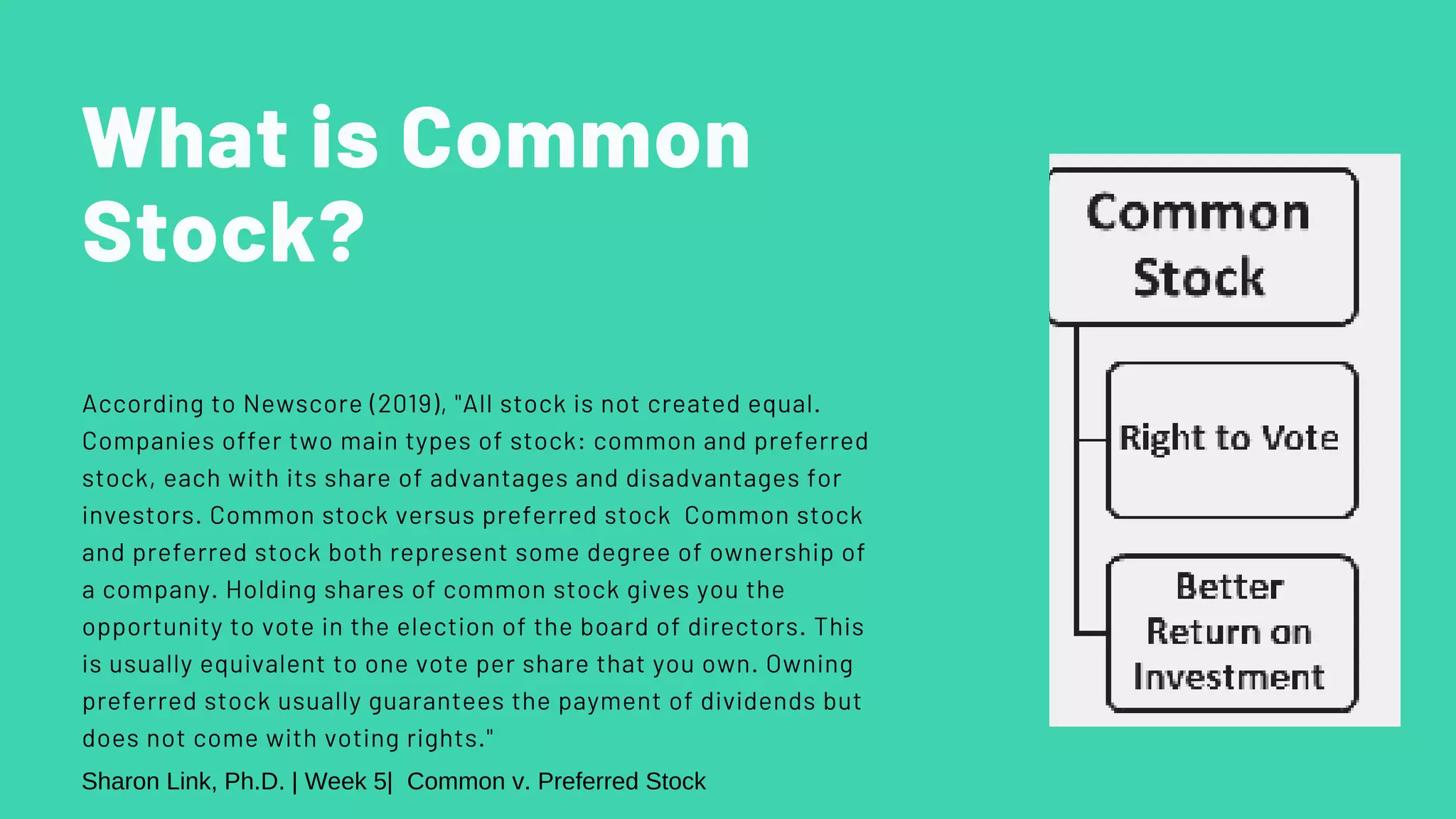
A lot of people hear What Is Common Stock and wonder is there an uncommon stock? Well, sort of. There’s preferred stock, and the two are quite different animals even though they both represent ownership in a company.
Preferred stockholders generally don’t get voting rights. That might sound like a bad deal, but they get something valuable in return priority. If the company pays out dividends, preferred shareholders get paid first. And if the company goes bankrupt and has to liquidate its assets, preferred stockholders stand ahead of common stockholders in line to get their money back. Common stockholders? They get whatever’s left which is often nothing in a bankruptcy scenario.
So why would anyone choose What Is Common Stock over preferred? Simple: upside potential. Common stock is where the real growth happens. If you bought Apple stock early on or got into Amazon before it became the giant it is today, the returns were astronomical. Preferred stock tends to behave more like a bond — stable, predictable, but with limited growth potential. For investors chasing long-term wealth building, common stock is usually the go-to vehicle.
Dividends and Common Stockholders
What Is Common Stock Here’s something a lot of new investors don’t realize upfront owning common stock doesn’t automatically mean you’ll receive dividends. Dividends are distributions of a company’s profits paid out to shareholders, but not every company pays them, and those that do aren’t legally required to keep paying them.
Growth-oriented companies — think tech startups or fast-expanding businesses — usually reinvest all their profits back into the company rather than paying dividends. They’d rather use that cash to hire more engineers, launch new products, or expand into new markets. Investors in these companies are betting on the stock price rising significantly over time, not on collecting quarterly checks.
On the other hand, mature, established companies — utilities, consumer staples, large financials — tend to pay regular dividends because their growth has stabilized and they generate more cash than they can productively reinvest. For income-focused investors, especially retirees, dividend-paying common stocks can be an attractive option. Just keep in mind that dividends on common stock can be reduced or eliminated at any time, unlike the more predictable payments tied to preferred stock.
The Risk Factor What You Need to Know
What Is Common Stock Let’s be real comes with risk. That’s the trade-off for the potential of higher returns. The stock market doesn’t go up in a straight line, and individual stocks can be even more volatile than the broader market. A company can lose half its value in a single day if bad news hits hard enough.
One of the most important concepts to understand is that common stockholders are last in line during a bankruptcy. The company’s creditors banks, bondholders — get paid first. Then preferred stockholders. Then, and only then, common stockholders. In most bankruptcy cases, common stockholders walk away with little to nothing. That’s a sobering reality that underscores why diversification matters so much.
What Is Common Stock That said, risk isn’t the same as a guarantee of loss. Historically, the stock market has delivered strong long-term returns despite crashes, recessions, and all kinds of crises. The key is holding a diversified portfolio, staying invested through the ups and downs, and not making emotional decisions when volatility spikes. Risk managed smartly is just the cost of doing business as a long-term investor.
How to Buy Common Stock
Getting started with What Is Common Stock is more accessible today than it’s ever been. Gone are the days when you needed a full-service broker and a fat commission check just to buy a few shares. Today, anyone can open a brokerage account online — platforms like Fidelity, Charles Schwab, or Robinhood — and start investing within minutes.
Once your account is funded, buying stock is as simple as searching for the company’s ticker symbol and placing a buy order. You can buy as little as one share, and many platforms now offer fractional shares, meaning you can invest in a company like Amazon or Tesla with as little as a few dollars even if a single share costs hundreds or thousands.
The bigger question isn’t how to buy stock it’s what to buy and when. That’s where research comes in. Investors typically look at a company’s financial statements, earnings reports, competitive position, and growth prospects before buying in. Others prefer a passive approach, investing in index funds that track the overall market rather than picking individual stocks. Both strategies have their merits, and the right one depends on your goals, time horizon, and risk tolerance.
Why Companies Issue Common Stock
From the company’s perspective, issuing What Is Common Stock is one of the most powerful ways to raise capital without taking on debt. When a business goes public through an Initial Public Offering (IPO), it sells shares to the general public and raises funds that it can use to grow the business, pay down existing debt, or invest in new infrastructure.
Unlike borrowing money, issuing stock doesn’t require the company to make regular interest payments. There’s no loan to pay back. The trade-off is that the original owners are diluting their ownership — every new share issued means existing shareholders own a slightly smaller percentage of the company. That’s why seasoned investors pay close attention to share dilution when evaluating a stock.
Beyond the IPO, companies can also issue additional shares later on through what’s called a secondary offering. This is another way to raise capital, but it can sometimes signal that a company is struggling financially — or it can be a sign of aggressive expansion. Context matters enormously, and experienced investors know how to read these moves carefully.
Common Stock and Long Term Wealth Building
At the end of the day, What Is Common Stock has been one of the most reliable engines of long-term wealth creation in modern financial history. The S&P 500, an index that tracks 500 of the largest publicly traded companies in the United States, has returned an average of roughly 10% annually over the long term, including dividends. That kind of compounding return, reinvested over decades, is what turns modest monthly contributions into serious retirement wealth.
The reason What Is Common Stock performs so well over time is rooted in the nature of business itself. Companies innovate, expand, and become more efficient over time. As they grow their revenues and profits, the value of their shares rises accordingly. When you own common stock, you’re essentially owning a stake in that growth engine.
Of course, patience is non-negotiable. Short-term market movements are unpredictable and often irrational. But investors who stay the course who hold quality stocks through the inevitable downturns and don’t panic-sell at the bottom have historically been rewarded handsomely. That’s the fundamental promise of What Is Common Stock investing, and it’s why it remains the cornerstone of most long-term investment portfolios around the world.
Final Thoughts
What Is Common Stock isn’t some mysterious financial instrument reserved for Wall Street insiders. It’s a straightforward tool that gives everyday people a chance to participate in the growth of the economy’s best businesses. Yes, it comes with risk. Yes, the market can be volatile and sometimes downright brutal. But with a clear understanding of what What Is Common Stock, how it works, and where it fits in a broader investment strategy, anyone can use it to build real, lasting wealth over time. The key is starting with knowledge — and now you’ve got a solid foundation to build on.
You May Also Read