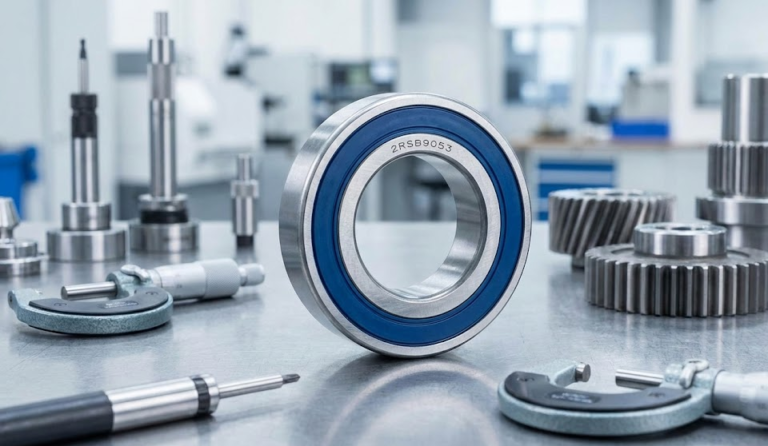
In today’s fast-moving digital and industrial landscape, alphanumeric codes like 2RSB9053 often pop up in product listings, technical documentation, inventory sheets, or manufacturing databases. At first glance, it may look like just another random combination of letters and numbers. However, such codes are rarely random. They usually carry structured meaning, representing a specific product, batch, model type, or technical configuration.
In this article, we will take a deep dive into 2RSB9053—what it could represent, how such codes are typically structured, where they are used, and why they matter. Whether you are dealing with eCommerce, industrial components, electronics, or inventory management, understanding codes like this can give you a serious edge.
Let’s break it down properly and professionally.
Understanding the Structure of 2RSB9053
The first thing any expert does when analyzing a code like 2RSB9053 is to break it into meaningful segments. Most alphanumeric product codes follow a structured format. They often consist of prefixes, identifiers, and serial numbers. In this case, we can logically divide the code into three parts: 2RSB – 9053.
The prefix section, “2RSB,” likely indicates a product category, technical specification, or manufacturer-specific classification. In industrial naming conventions, “2RS” is commonly associated with double rubber seals in bearings, while additional letters may indicate series, material type, or design variation. Although we cannot confirm the exact origin without a manufacturer reference, the structure strongly suggests technical classification.
The numerical section, “9053,” typically represents a model number, batch sequence, or dimensional specification. Numbers in such codes often correlate with size, production line, or internal tracking systems. This allows manufacturers and distributors to instantly identify key product characteristics without writing long descriptions.
Understanding this structure is essential because it transforms what looks like a random string into a potentially meaningful identifier.
Possible Industrial and Mechanical Applications

One of the most common areas where codes like 2RSB9053 appear is in mechanical and industrial components. Bearings, seals, automotive parts, and electronic components frequently use similar structured identifiers.
For example, in bearing systems, “2RS” often indicates a bearing that has rubber seals on both sides. This design helps prevent dust, moisture, and debris from entering the bearing housing. If 2RSB9053 belongs to such a category, it may refer to a sealed bearing variant designed for durability and low maintenance applications.
In automotive or machinery contexts, such identifiers allow engineers and technicians to order the exact replacement part without confusion. Precision is critical in mechanical systems. Even a slight mismatch in dimensions or sealing type can cause performance issues or equipment failure.
Furthermore, manufacturers rely heavily on these codes for inventory tracking. Warehouses may store thousands of similar-looking components. Without structured identifiers like 2RSB9053, logistical operations would become chaotic and inefficient.
Role in Supply Chain and Inventory Management
Beyond technical usage, codes like 2RSB9053 play a powerful role in supply chain management. Modern businesses depend on accurate labeling to streamline purchasing, shipping, and warehouse organization.
In a digital inventory system, each product needs a unique identifier. This identifier links to product specifications, supplier data, pricing information, and stock levels. When someone searches for 2RSB9053 in a database, they expect to retrieve precise and consistent information.
Barcode systems and ERP (Enterprise Resource Planning) platforms rely on such codes for automation. Scanning a product labeled 2RSB9053 instantly updates stock levels, generates invoices, and triggers restocking alerts. This level of efficiency would not be possible without standardized naming conventions.
Moreover, in global trade, consistent coding ensures smooth communication between manufacturers, distributors, and retailers. Even if companies operate in different countries or languages, a product code remains universally recognizable within that supply chain.
Digital Cataloging and eCommerce Significance
In the eCommerce space, structured identifiers like 2RSB9053 are equally important. Online marketplaces, including Amazon and industrial supply platforms, depend heavily on product codes for catalog accuracy.
When customers search for a specific part number, they are often looking for an exact match. Unlike general browsing, part-number searches indicate high purchase intent. A buyer typing 2RSB9053 into a search bar likely knows exactly what they need.
From an SEO perspective, optimizing product pages around such identifiers can significantly improve targeted traffic. Including the exact code in titles, descriptions, and metadata ensures visibility for precise queries. Businesses that overlook this often miss out on ready-to-buy customers.
Additionally, product codes reduce ambiguity. Many industrial items look identical in photos. The part number eliminates guesswork and assures buyers they are purchasing the correct item.
Quality Control and Manufacturing Traceability
Another critical function of codes like 2RSB9053 lies in quality control and traceability. Manufacturers use structured identifiers to track production batches, raw materials, and inspection reports.
If a defect is discovered in a specific batch, the code allows the company to isolate affected units quickly. Instead of recalling entire product lines, they can narrow it down to specific serial ranges. This saves money and protects brand reputation.
Traceability is particularly important in industries such as automotive, aerospace, and medical equipment. Safety standards require detailed documentation of every component used. A code like 2RSB9053 may link to test certifications, compliance reports, and supplier data.
This system not only improves safety but also strengthens accountability within manufacturing ecosystems.
How to Verify and Identify 2RSB9053 Properly
If you encounter 2RSB9053 and need to verify its meaning, the first step is to consult the manufacturer’s catalog or official database. Most companies provide detailed specification sheets linked to their product codes.
Cross-referencing the code with supplier listings is also helpful. Industrial distributors often include dimensional data, material specifications, and compatibility information. Comparing multiple sources ensures accuracy.
If the product relates to mechanical parts, checking measurements and seal types is essential. Never rely solely on the alphanumeric string—physical specifications must match your application requirements.
When dealing with online purchases, always confirm authenticity. Counterfeit components sometimes mimic legitimate product codes. Purchasing from authorized suppliers reduces this risk significantly.
Why Codes Like 2RSB9053 Matter More Than You Think
At a surface level, 2RSB9053 may appear to be just another technical label. However, in reality, it represents organization, efficiency, and precision. Without such identifiers, modern manufacturing and commerce would struggle to function effectively.
Product codes reduce errors. They enhance communication. They streamline global trade. From factory floors to online marketplaces, structured identifiers form the backbone of operational systems.
For businesses, understanding and properly using such codes can improve customer satisfaction and operational efficiency. For consumers and technicians, recognizing these identifiers ensures accurate purchasing decisions.
In a world increasingly driven by automation and data systems, even a seemingly simple string like 2RSB9053 carries substantial importance.
Final Thoughts on 2RSB9053
In conclusion, while the exact origin of 2RSB9053 depends on its manufacturer or industry context, its structure strongly suggests a technical product identifier. Such codes are vital in industrial classification, supply chain management, eCommerce optimization, and quality control systems.
By learning to analyze and interpret structured identifiers, professionals can make smarter decisions, reduce costly mistakes, and improve workflow efficiency. What might look like a random code often tells a deeper story about product specifications and operational systems.
So next time you encounter 2RSB9053—or any similar alphanumeric sequence—don’t dismiss it as meaningless. There is almost always logic behind it. And understanding that logic is what separates amateurs from true experts.
You May Also Read